Case study
Connecting train journeys with first and last mile.
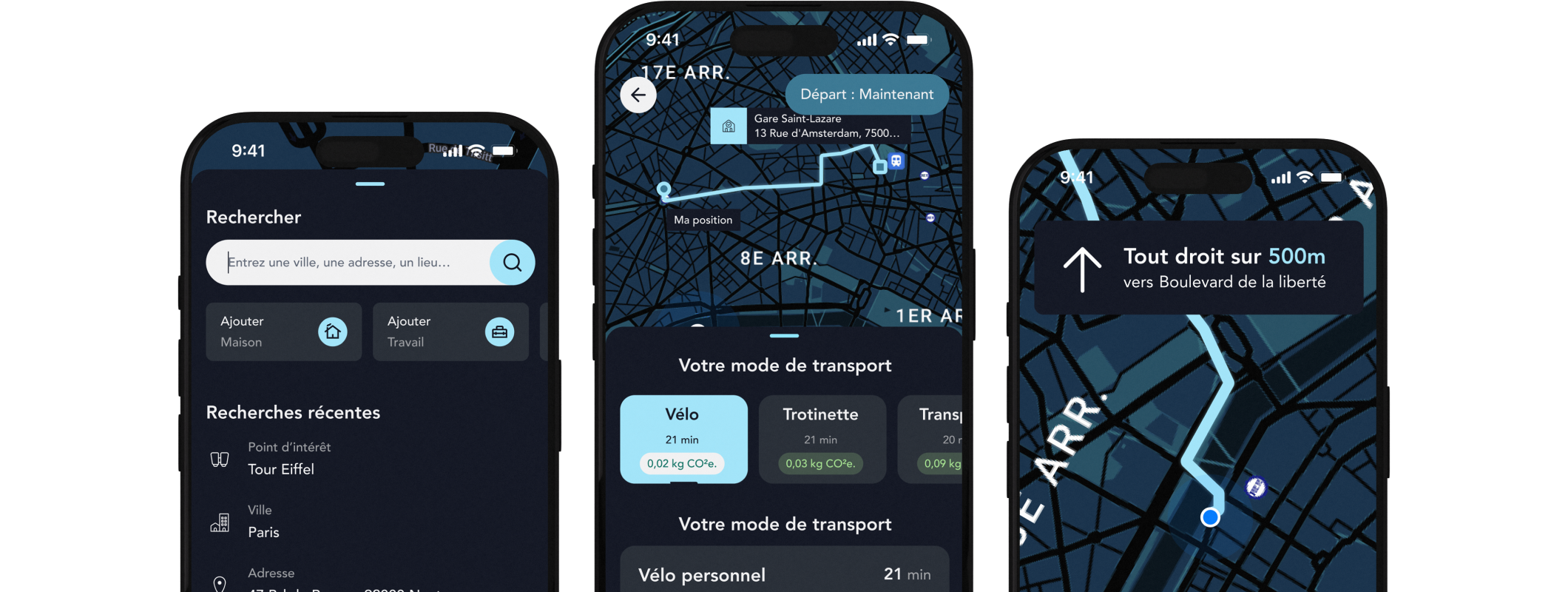
Designed and presented a new feature for SNCF Connect mobile app during summer school hackathon.
Role & Tasks
Product Designer: UX Analysis, Audit, UX Design & UI Design
Timeline & Status
3 weeks (2024)
Hackathon project: Top #3
Team
4 Product Design Students: Maxime Chassard, Lucas Thiesset, Maxime Madouni, & me
Project summary
This project is part of a summer school hackathon in collaboration with SNCF Connect & Tech which is the major french trainline company.
We designed and presented a feature that integrates micromobility service into train journeys. Our project ranked top 3 from Jury’s Favorite. SNCF announced later in 2025, releasing features alike in their mobile app.

CONTEXT
What problem are we trying to solve?
SNCF Connect challenged us to explore the following question

INITIAL RESEARCH
Car use remains dominant even for short journeys.
We reviewed publicly available studies on travel habits and train use to better understand the role of the car in these journeys.
Cars dominate commuting, and remains deeply embedded in daily mobility habits.
74%
of commuting trips in metropolitan France are made by car
54%
of trips under 20 km are made by a single driver
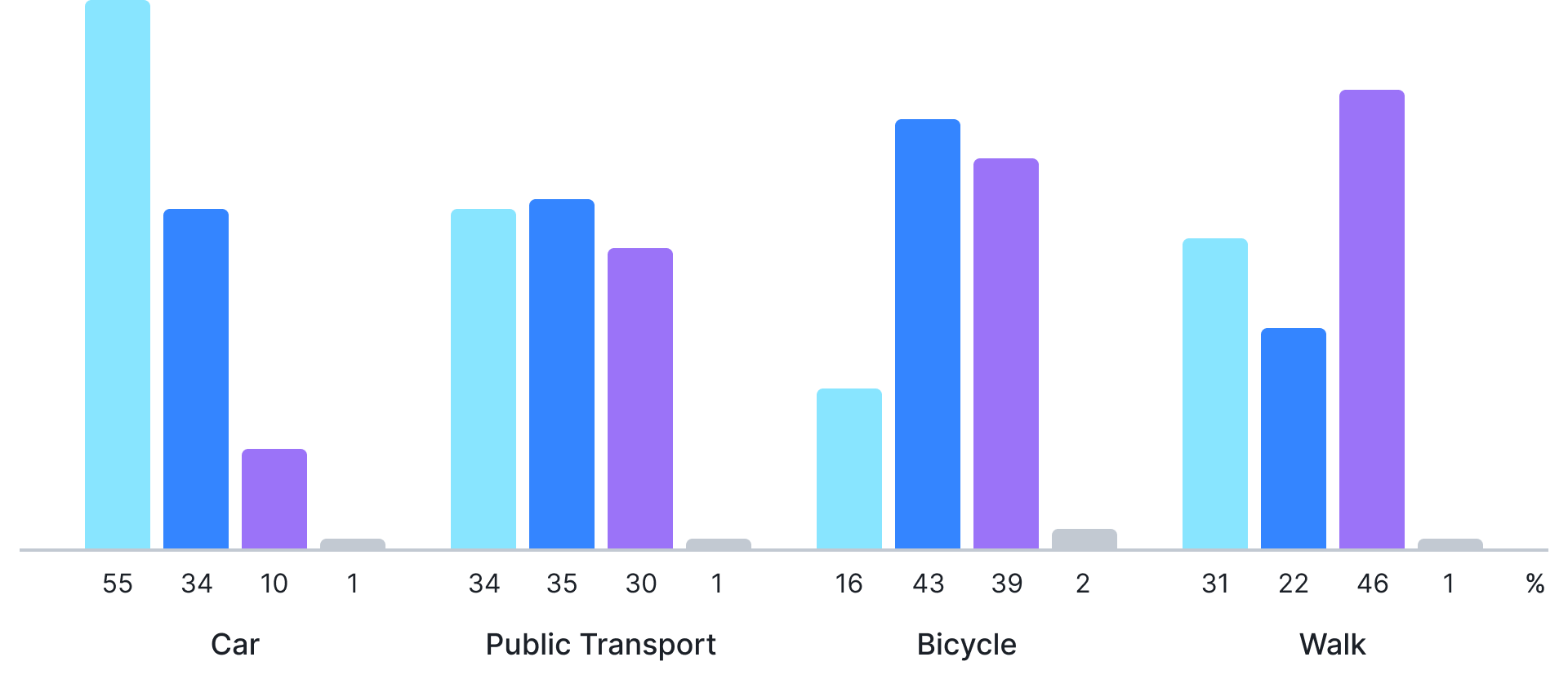
Cars remains largely preferred to reach train station over other means of transport.
Prefer
Possible but not preferred
Not possible
No opinion
Source: The French and train usage – Harris Interactive (2023)
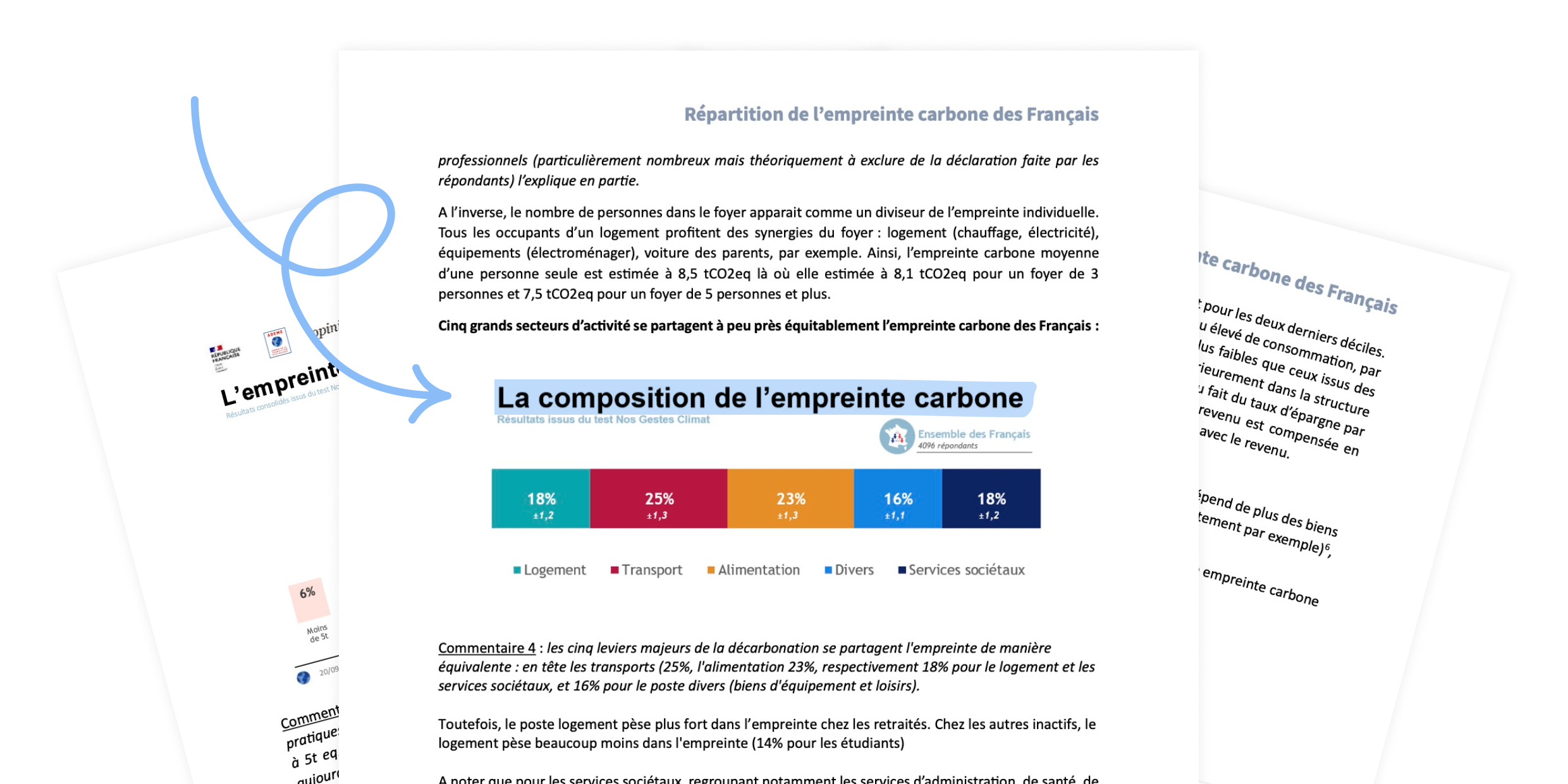
Transport represents ~25% of the average carbon footprint in France—more than food and housing.
Source: CITEPA & ABC study (2022–2023), supported by ADEME and conducted with OpinionWay

PROBLEM & HYPOTHESIS
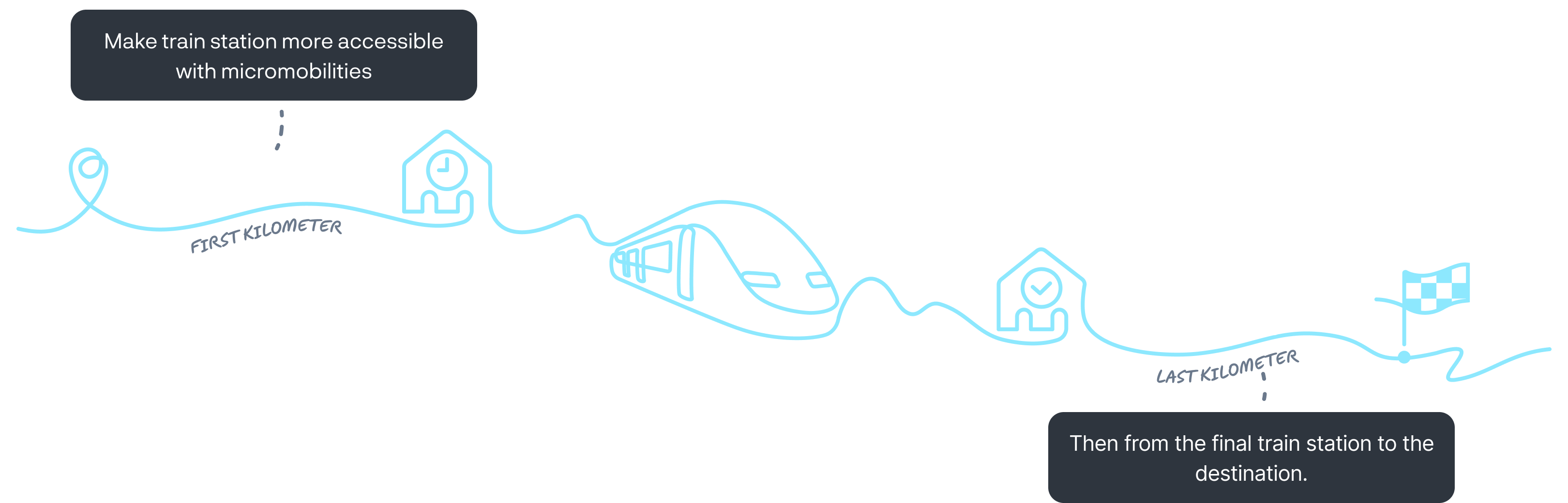
Focusing on the first and last mile.
From the early research we did, we framed the problem to a more specific problem we wanted to tackle and explored ideas before defining project hypothesis.
Framed problem statement
We brainstormed ideas from the two problem perspectives
Hypothesis statement

SOLUTION
How does our solution look like.

CURRENT STATE ANALYSIS
Starting from how Connect was built so far.
Short vs long journey
From the main screen search engine, there is two types of results depending from request:
- the short journeys, which are trips within the same city or metropolitan area
- the long journeys, which are city-to-city train trips
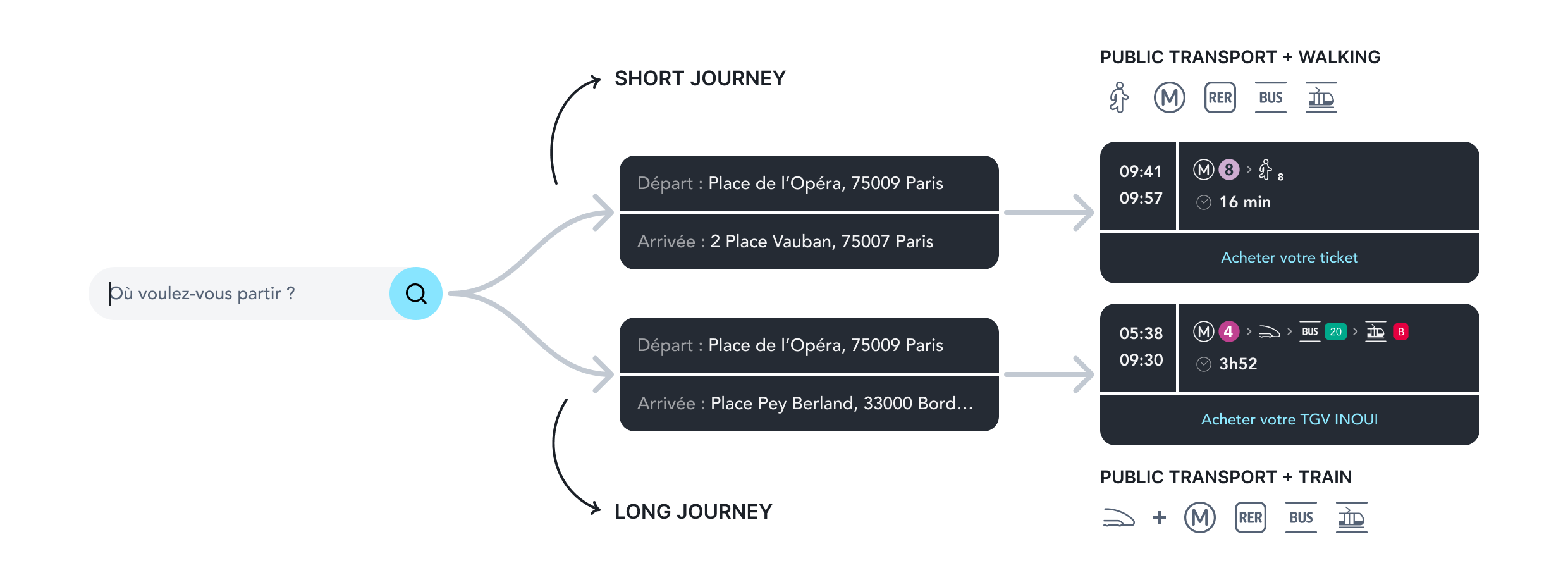
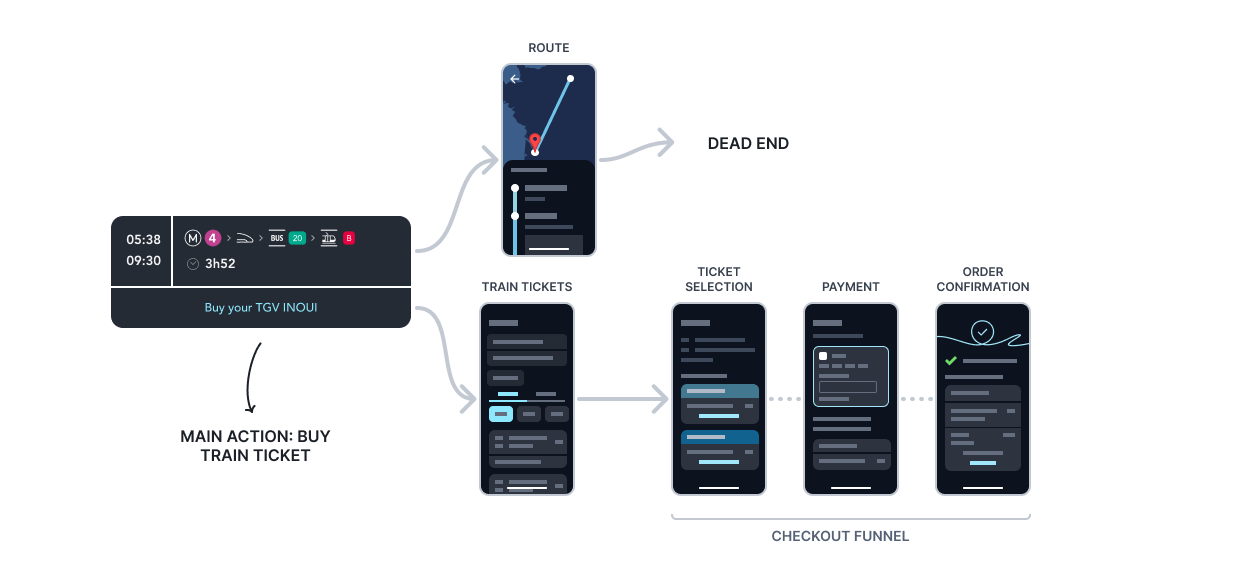
An experience built around ticket purchasing
Given these two types of results, the main action is buying a train ticket or a transit pass. While it's possible to view the route, this path leads to no outcome or action.

USER EXPERIENCE
Alongside the train journey.
First direction
Our first idea was to offer a range of transport options following the user's search. We placed the car at the top of the results, thinking it would serve as a good benchmark for travelers to weigh the trade-offs.
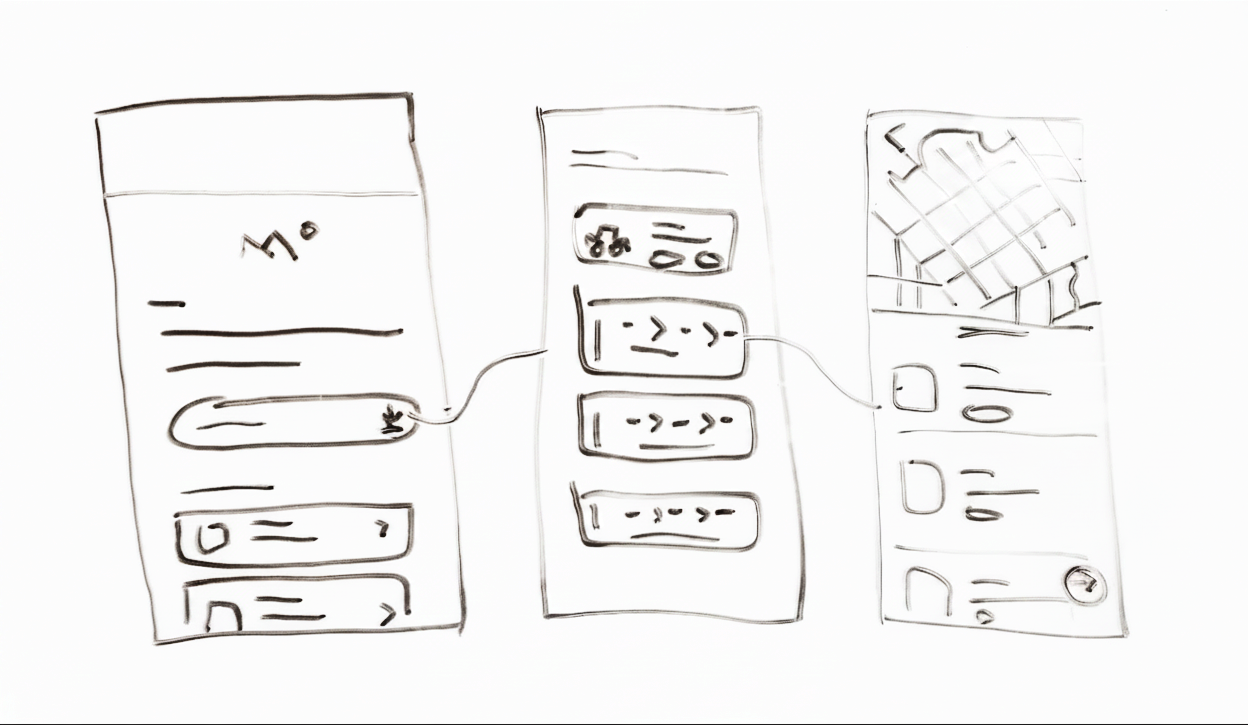
Designing the first mile experience
From this rough draft, we designed the main flow to complete a short journey. This same journey is meant to sit before or after the train trip creating an intermodal experience.
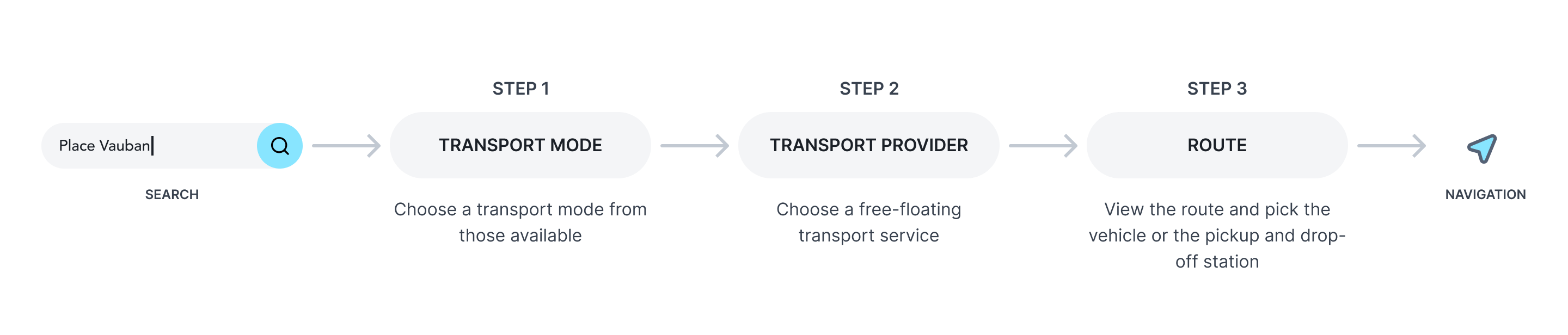
From first to last mile
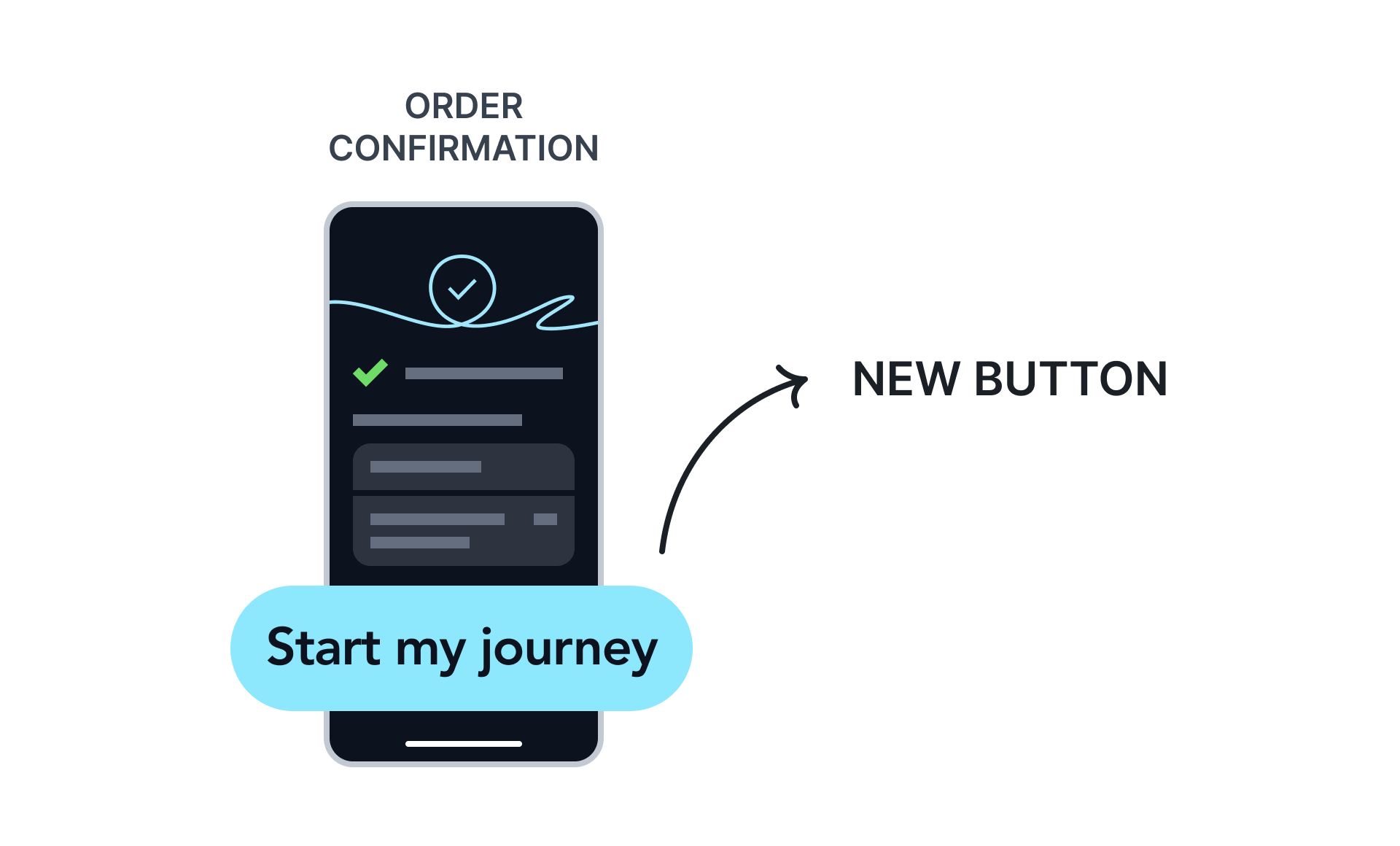
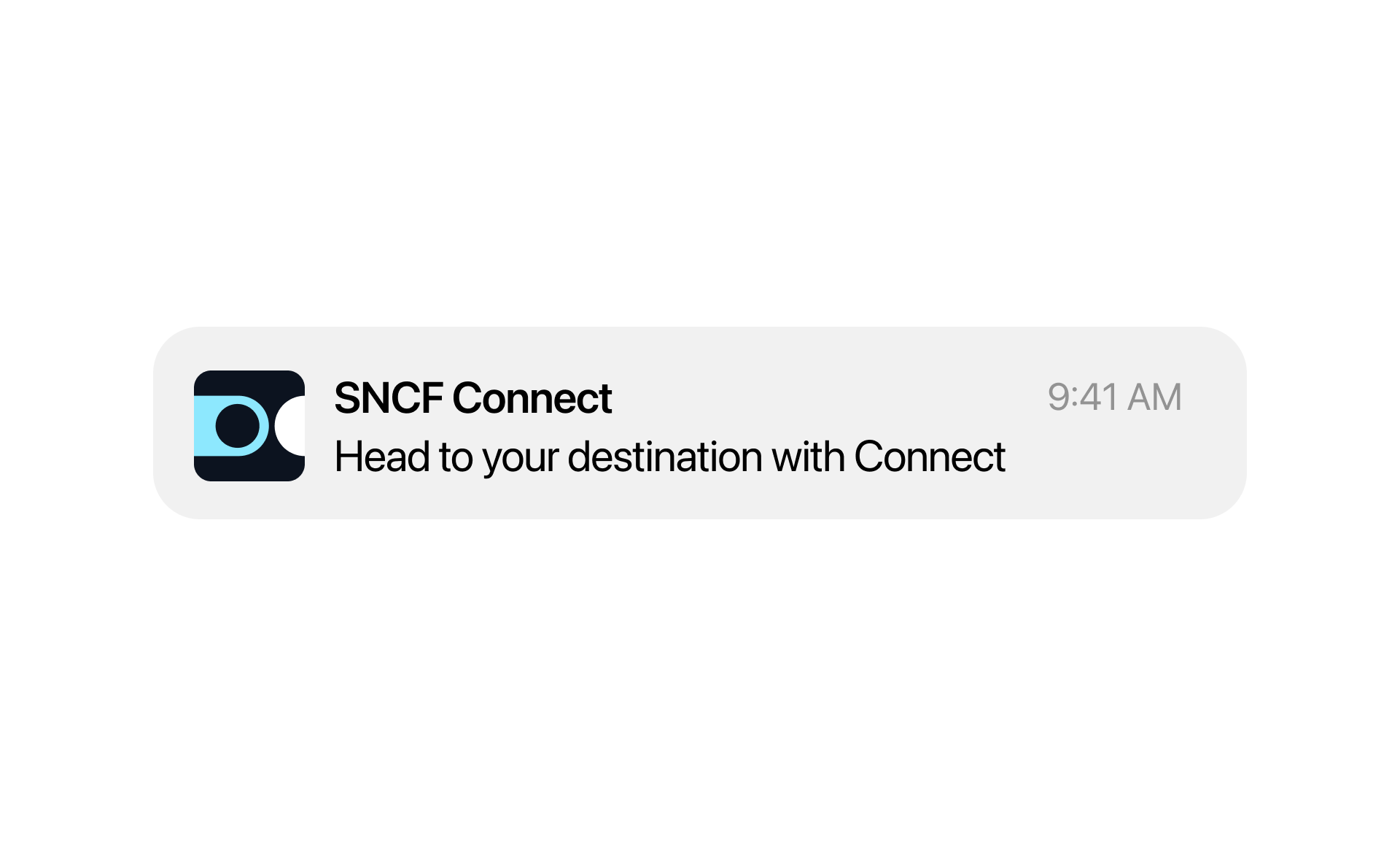
Finally, we included this flow into the train journey by adding entry points:
- After buying the train ticket, to get to the station
- Once at the destination station, to reach the final destination
First mile
Last mile

OJBECTIVES
Design principles

Promote green mobility through design

Transform Connect as a standard for mobility

Deepen trust through interaction
This project is in redaction.
Contact me if interested.
Thank you for your interest!
Back to projects
Case study
Connecting train journeys with first and last mile.
Designed and presented a new feature for SNCF Connect mobile app during summer school hackathon.
Role & Tasks
Product Designer: UX Analysis, Audit, UX Design & UI Design
Timeline & Status
3 weeks (2024)
Hackathon project: Top #3
Team
4 Product Design Students: Maxime Chassard, Lucas Thiesset, Maxime Madouni, & me
Project summary
This project is part of a summer school hackathon in collaboration with SNCF Connect & Tech which is the major french trainline company.
We designed and presented a feature that integrates micromobility service into train journeys. Our project ranked top 3 from Jury’s Favorite. SNCF announced later in 2025, releasing features alike in their mobile app.
CONTEXT
What problem are we trying to solve?
SNCF Connect challenged us to explore the following question
INITIAL RESEARCH
Car use remains dominant even for short journeys.
We reviewed publicly available studies on travel habits and train use to better understand the role of the car in these journeys.
Cars dominate commuting, and remains deeply embedded in daily mobility habits.
74%
of commuting trips in metropolitan France are made by car
54%
of trips under 20 km are made by a single driver
Cars remains largely preferred to reach train station over other means of transport.
Prefer
Possible but not preferred
Not possible
No opinion
Source: The French and train usage – Harris Interactive (2023)
Transport represents ~25% of the average carbon footprint in France—more than food and housing.
Source: CITEPA & ABC study (2022–2023), supported by ADEME and conducted with OpinionWay
PROBLEM & HYPOTHESIS
Focusing on the first and last mile.
From the early research we did, we framed the problem to a more specific problem we wanted to tackle and explored ideas before defining project hypothesis.
Framed problem statement
We brainstormed ideas from the two problem perspectives
Hypothesis statement
SOLUTION
How does our solution look like.
CURRENT STATE ANALYSIS
Starting from how Connect was built so far.
Short vs long journey
From the main screen search engine, there is two types of results depending from request:
- the short journeys, which are trips within the same city or metropolitan area
- the long journeys, which are city-to-city train trips
An experience built around ticket purchasing
Given these two types of results, the main action is buying a train ticket or a transit pass. While it's possible to view the route, this path leads to no outcome or action.
USER EXPERIENCE
Alongside the train journey.
First direction
Our first idea was to offer a range of transport options following the user's search. We placed the car at the top of the results, thinking it would serve as a good benchmark for travelers to weigh the trade-offs.
Designing the first mile experience
From this rough draft, we designed the main flow to complete a short journey. This same journey is meant to sit before or after the train trip creating an intermodal experience.
From first to last mile
Finally, we included this flow into the train journey by adding entry points:
- After buying the train ticket, to get to the station
- Once at the destination station, to reach the final destination
First mile
Last mile
OJBECTIVES
Design principles
Promote green mobility through design
Transform Connect as a standard for mobility
Deepen trust through interaction
This project is in redaction.
Contact me if interested.
Thank you for your interest!
Back to projects
Case study
Connecting train journeys with first and last mile.
Designed and presented a new feature for SNCF Connect mobile app during summer school hackathon.
Role & Tasks
Product Designer: UX Analysis, Audit, UX Design & UI Design
Timeline & Status
3 weeks (2024)
Hackathon project: Top #3
Team
4 Product Design Students: Maxime Chassard, Lucas Thiesset, Maxime Madouni, & me
Project summary
This project is part of a summer school hackathon in collaboration with SNCF Connect & Tech which is the major french trainline company.
We designed and presented a feature that integrates micromobility service into train journeys. Our project ranked top 3 from Jury’s Favorite. SNCF announced later in 2025, releasing features alike in their mobile app.

CONTEXT
What problem are we trying to solve?
SNCF Connect challenged us to explore the following question

INITIAL RESEARCH
Car use remains dominant even for short journeys.
We used open data to understand train and travel habits and to get a wide picture of the role of the car in the journey.
Cars dominate commuting, and remains deeply embedded in daily mobility habits.
74%
of commuting trips in metropolitan France are made by car
54%
of trips under 20 km are made by a single driver
Cars remains largely preferred to reach train station over other means of transport.
Prefer
Possible but not preferred
Not possible
No opinion
Source: The French and train usage – Harris Interactive (2023)
Transport represents a quarter of average french citizen carbon footprint, more than food and housing.
Source: CITEPA & ABC study (2022–2023), supported by ADEME and conducted with OpinionWay

PROBLEM & HYPOTHESIS
Focusing on the first and last mile.
From the early research we did, we framed the problem to a more specific problem we wanted to tackle and explored ideas before defining project hypothesis.
Framed problem statement
We brainstormed ideas from the two problem perspectives
Hypothesis statement

SOLUTION
How does our solution look like.

CURRENT STATE ANALYSIS
Starting from how Connect was built so far.
Short vs long journey
From the main screen search engine, we noticed two types of results depending from request:
- the short journeys, which are trips within the same city or metropolitan area
- the long journeys, which are city-to-city train trips
An experience built around ticket purchasing
Given these two types of results, the main action was always buying a train ticket or a transit pass. While it's possible to view the route, this path leads to no outcome or action.

USER EXPERIENCE
Alongside the train journey.
First direction
Our first idea was to offer a range of transport options following the user's search. We placed the car at the top of the results, as a benchmark for travelers to weigh the trade-offs.
Designing the first mile experience
From this rough draft, we designed the main flow to complete a short journey. This same journey is meant to sit before or after the train trip creating an intermodal experience.
From first to last mile
Finally, we included this flow into the train journey by adding entry points:
- After buying the train ticket, to get to the station
- Once at the destination station, to reach the final destination
First mile
Last mile

OJBECTIVES
Design principles

Promote green mobility through design

Transform Connect as a standard for mobility

Deepen trust through interaction
This project is in redaction.
Contact me if interested.
Thank you for your interest!
Back to projects